
- Home
- Products
- About
- DIY
- Support
- News
- Contact
- EN/CN
-
- Standing Desk Structure Guide: Material, Columns, and StabilityPublished:2026-07-31 Views:3




As the healthy office concept of "sit-stand balance" gains popularity, electric standing desks have been widely adopted across corporate offices, high-intensity R&D workstations, and home office setups.
When evaluating product quality during purchase, high-position stability remains the primary metric for users. While most buyers focus on motor brands, adjustment speed, or control panel features, from a mechanical engineering perspective, an adjustable height desk is a complete structural system comprising the drive system, support columns, connecting frame, and base.
The hidden elements beneath the tabletop—such as desk leg material, tube wall thickness, column cross-section shape, and crossbar connection methods—are the real factors determining load capacity, torsional rigidity, and long-term stability.
Standing Desk Leg Materials and Wall Thickness
When an ergonomic standing desk is raised under heavy loads, the strain points include not only the vertical downward force from the desktop and equipment, but also lateral shear force and side-tipping torque caused by user pressure or equipment movement. As the primary support component, the mechanical properties of the desk legs directly dictate overall deformation resistance.
1. Material Characteristics and Applications
The market primarily features two main leg materials: Cold-Rolled Steel (SPCC) and Aluminum Alloy:
Cold-Rolled Steel (SPCC)
Mechanical Traits: High yield strength and elastic modulus, exceptional rigidity, low deformation rate under stress, and superior bending and shear resistance.
Surface Treatment: Electrostatic powder coating creates a dense protective layer, offering both wear resistance and corrosion resistance.
Engineering Rating: Excellent cost-performance ratio and structural strength, making it the top choice for commercial and high-performance home office standing desks.
Aluminum Alloy
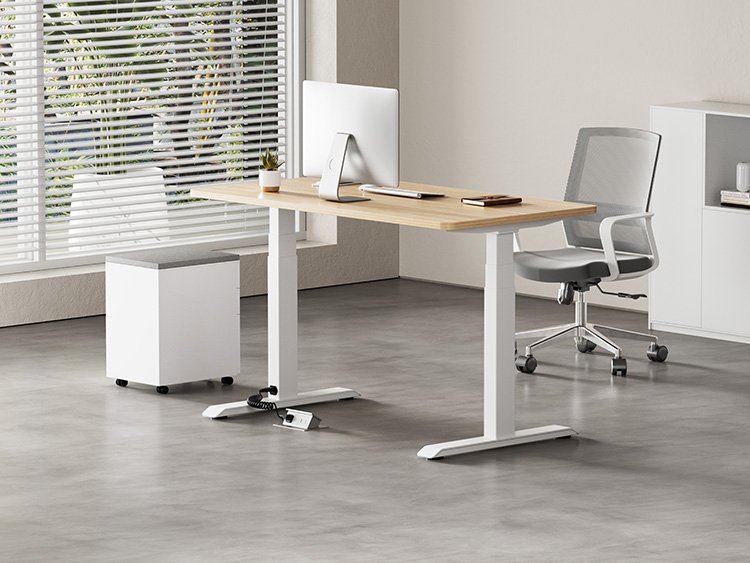
Mechanical Traits: Low density, lightweight, natural corrosion resistance, and premium aesthetic texture.
Engineering Rating: At equal wall thickness, aluminum alloy offers less bending rigidity than cold-rolled steel. Achieving the same anti-shake strength requires larger cross-sections and thicker walls, leading to higher costs. It is typically best suited for light-duty office use or design-focused spaces.
2. Load-Bearing Performance by Tube Wall Thickness
Tube Wall Thickness Mechanical Performance & Anti-Deformation Recommended Application 1.2 mm – 1.5 mm
Basic bending rigidity; prone to micro-elastic deformation under lateral forces at high positions.
Suitable for light office use, small desktop sizes (<1.2m), or budget-sensitive setups.
1.5 mm – 2.0 mm
The golden balance zone. Superior rigidity, strong resistance to daily external forces, and rapid deformation recovery.
Widely used in standard corporate offices, home workstations, and mainstream sit-stand desk products.
2.0 mm and above
Ultra-high rigidity, extreme torsional torque, long fatigue life, and exceptionally stable anti-shake performance.
Ideal for large desktops (>1.4m), multi-monitor setups, heavy gaming rigs, and high-load industrial scenarios.
Essentially, standing desk legs form a dynamic load-bearing structure. When elevated, the legs must withstand vertical weight while resisting horizontal forces generated by user interaction and equipment movement.
Stability manifests in daily user experience through three key aspects:
Whether it wobbles at maximum height.
Whether it remains steady when lateral force is applied to the desktop.
Whether the structure maintains long-term reliability.
Desk Leg Structure: Column Shapes and Stages
Columns are the dynamic components that enable height adjustment. A longer elevation stroke creates a longer force arm, increasing the demand for column precision and cross-sectional rigidity.
1. Cross-Sectional Shape Analysis
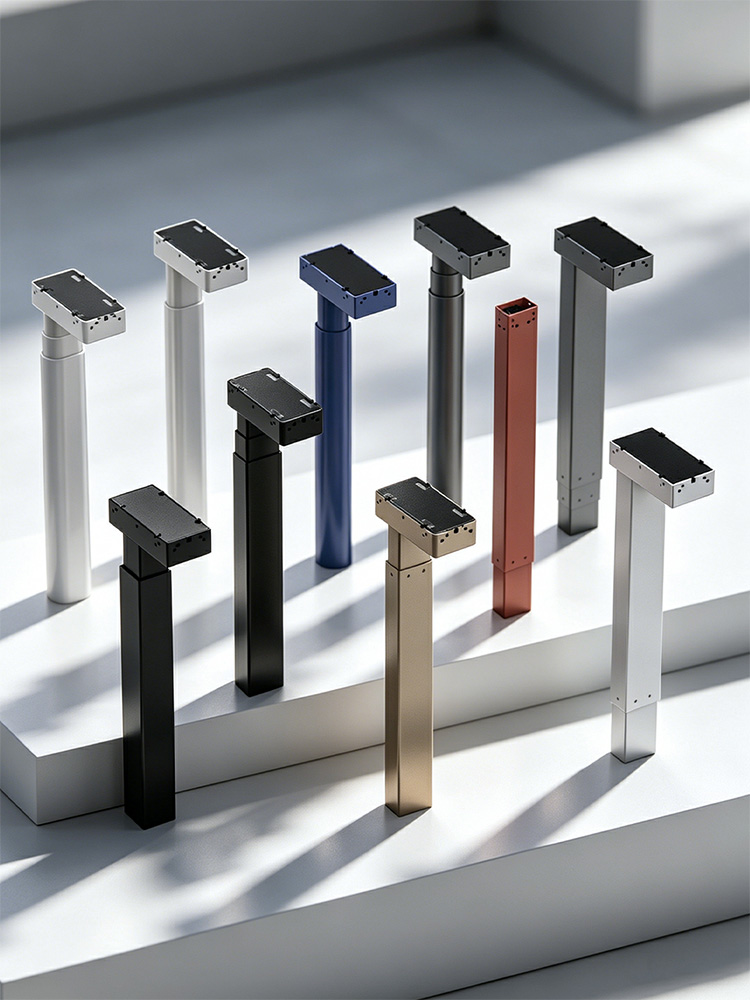
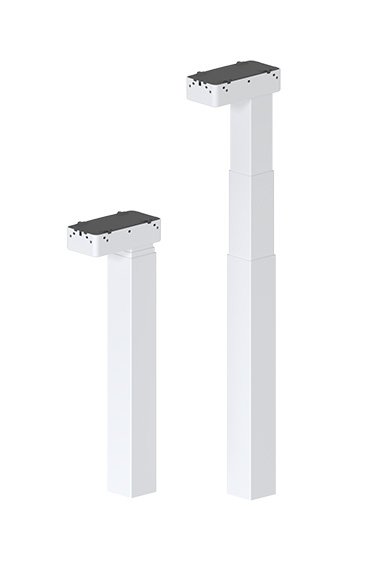
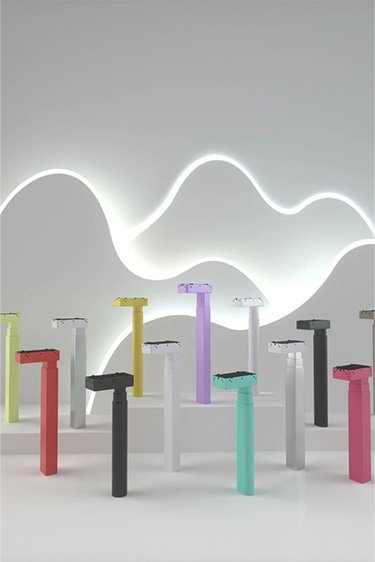
Based on cross-sectional geometry, stability ranks as follows: Rectangular/Square Tubes > Circular/Oval Tubes.
Rectangular/Square Tubes: The most common column shape. The four corners provide balanced stress points. When wall thickness reaches $ge 2.5 ext{ mm}$, it offers maximum rigidity and the best cost-performance ratio.
Circular/Oval Tubes: Slightly less resistant to bending than rectangular tubes at equal thickness, but offers a rounded, sleek visual style popular in high-end residential spaces.
2. Column Stages: 2-Stage vs. 3-Stage
Lifting columns consist of nested telescoping tubes. Micron-level mechanical tolerances (fitted with wear-resistant bushings) are maintained between tubes to ensure smooth movement.
2-Stage Legs: Height Range: 72 cm – 116 cm.
3-Stage Legs: Height Range: 66 cm – 131 cm (Offers a broader ergonomic range).
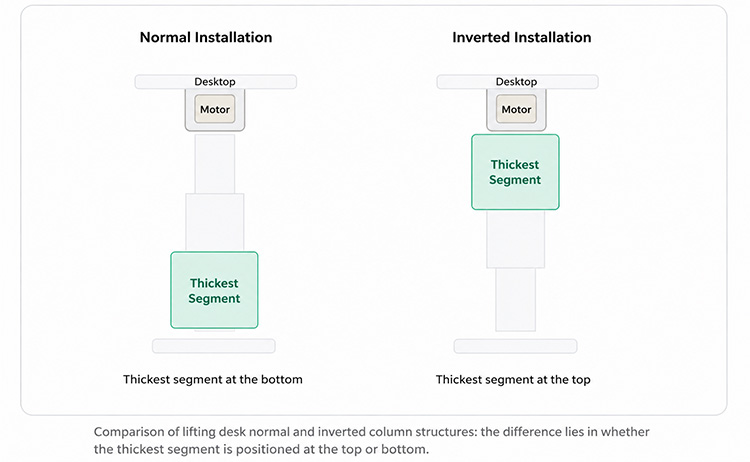
3. Orientation: Standard vs. Inverted Setup
Standard Setup (Thick Tube at Bottom, Thin Tube at Top): Lowers the desk's center of gravity. At higher positions, the rigid bottom tube handles the main bending moment, delivering superior overall stability.
Inverted Setup (Thin Tube at Bottom, Thick Tube at Top): Provides a seamless visual line without stepped gaps.
Standing Desk Crossbar Systems
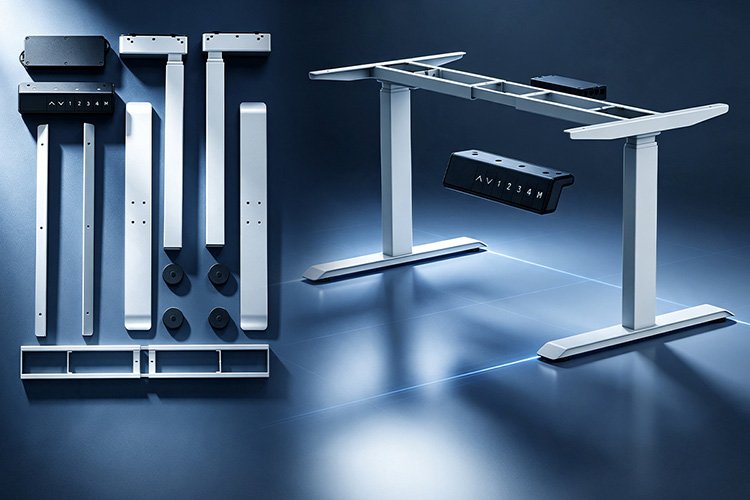
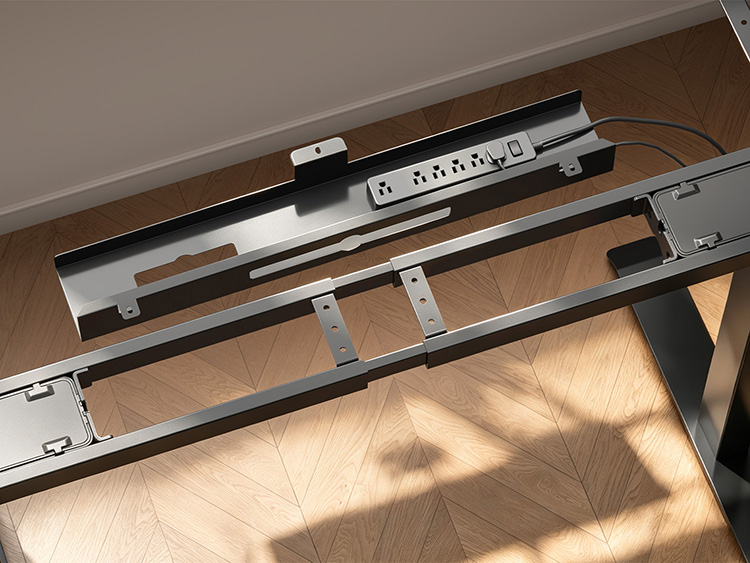
While lifting columns handle vertical loads, the crossbar frame connecting the left and right legs is the core component that prevents side-to-side racking and torsional deformation.
1.Crossbar Structural Form
Single Crossbar: A single steel tube connects both sides. Lightweight and simple, suitable for compact desktops or light office work.
Dual Crossbar: Parallel upper and lower crossbars connect to the columns, forming a closed box-frame structure. This design securely supports multi-device and heavy-duty industrial setups.
2.Fixed vs. Telescopic Crossbars
Fixed Crossbar: One-piece integrated steel tube offering high connection rigidity, but limited to fixed desktop dimensions.
Telescopic Crossbar: Utilizes an inner-and-outer tube sliding mechanism, allowing total length adjustments to accommodate various desktop sizes.
AOKE Manufacturing Craftsmanship and Quality Assurance
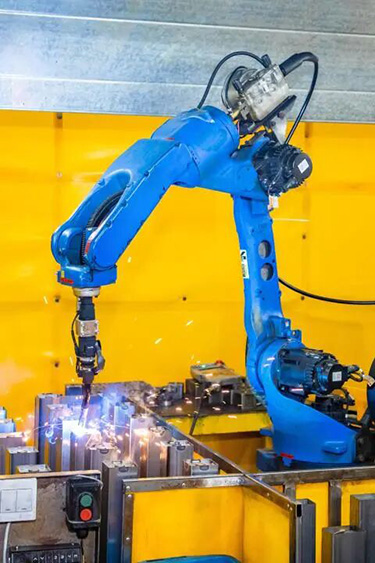
As a leading source manufacturer dedicated to smart linear drive R&D and manufacturing, AOKE leverages over 90% self-developed core components alongside OEM/ODM capabilities to deliver customized smart standing desk solutions for corporate offices, educational spaces, gaming, and industrial applications.
Premium Materials & Standardized Welding: High-quality cold-rolled steel and aluminum alloys are paired with standardized welding processes and anti-shift load structures, effectively counteracting thermal expansion and contraction stresses.
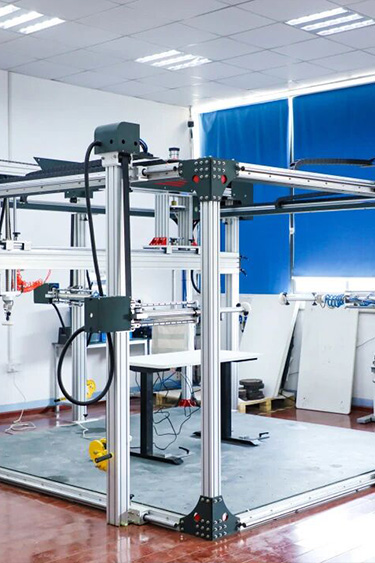
Rigorous Factory Testing: Every structural frame undergoes high/low-temperature testing, heavy-load fatigue testing, and stability inspections before shipment to ensure reliable performance in complex environments.
Flexible OEM/ODM Customization: Supports personalized development of column shapes, frame dimensions, surface finishes, and smart features, empowering clients to deliver differentiated market products quickly.
How to Choose the Right Standing Desk Structure by Application
Considering material, wall thickness, column stages, and frame design, use the following engineering standards to select the optimal electric height-adjustable desk:
Application Scenario
Recommended Material
Column Structure
Frame & Crossbar
Selection Rationale
Standard Corporate Workstation (Single monitor/laptop, standard height)
1.5 mm – 2.0 mm Cold-Rolled Steel
Rectangular
2-Stage Column
Standard Setup
Single or Telescopic Crossbar
Mature structure, cost-effective, fully meets daily sit-stand stability needs.
Shared Hot-Desks / Multi-User Workspaces
1.5 mm – 2.0 mm Cold-Rolled Steel
Rectangular
3-Stage Column (66–131 cm)
Telescopic
Dual Crossbar Frame
Prioritizes wide height range (66–131 cm) to accommodate diverse user heights ergonomically.
Heavy-Duty Workstations / Gaming / Industrial
2.0 mm+ Heavy Cold-Rolled Steel
Rectangular
2-Stage or 3-Stage Column
Standard Setup
Dual Crossbar Box-Frame
Maximizes torsional rigidity and shear resistance, ensuring rock-solid stability at full height.
Executive Suites / Design Studios
High-Strength Aluminum Alloy / Premium Steel
Round or Oval
2-Stage Column
Integrated Frame
Prioritizes premium industrial design and aesthetic appeal over extreme load capacity limits.
While the elevation of an electric standing desk depends on motor power, its post-elevation stability is entirely determined by leg materials and structural engineering.
Systematically evaluating "under-the-hood" details—such as cold-rolled steel wall thickness, rectangular column precision, and dual-crossbar box frames—is essential to choosing a high-quality, durable sit-stand desk. AOKE will continue to drive innovation in linear drive technology, delivering safer, more stable, and highly reliable smart lifting solutions to global customers.
Compare Products 0
No products for comparison
-