
- Home
- Products
- About
- DIY
- Support
- News
- Contact
- EN/CN
-
- Linear Motion Technology: The Core Power Behind Aoke Standing DesksPublished:2026-08-28 Views:135




Linear motion technology is the bedrock of modern manufacturing, healthcare, and robotics. In these fields, its core value consistently lies in enabling controlled, precise, and repeatable movement along a straight line.
For AOKE smart standing desks, this technology is applied to an essential everyday scenario: enabling the desktop to smoothly and accurately switch between sitting and standing positions based on user height and usage preferences.
This article explores how AOKE drives advancements in linear motion solutions.
1. What Is Linear Motion Technology?
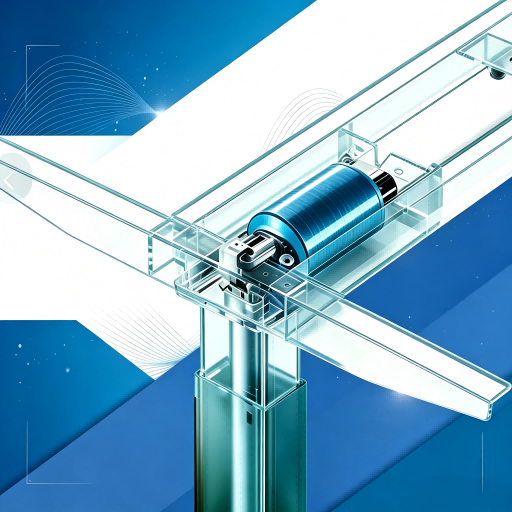
Linear motion technology integrates mechanical and electrical engineering to convert the rotational motion of a motor into linear reciprocating movement. In an electric standing desk, it consists of a motor, gearbox, lead screw, column structure, and electronic control system. It serves as the core power engine that determines whether a standing desk can achieve smooth operation, precise positioning, high load capacity, and long-term durability.
Simply put: Electrical Energy → Motor Power → Transmission Mechanism → Linear Motion → Lifting Column Extension/Retraction → Desktop Height Adjustment
Therefore, an electric standing desk is far more than simply "installing a motor". It is a closed-loop system combining power output, thrust execution, guidance support, and electronic control.
2. Integrating Physical Principles into AOKE Engineering Design
The exceptionally smooth experience of AOKE linear drive systems stems from a deep understanding and precise control of classical mechanical laws:
Inertia Shock Suppression Algorithm: Significant inertia occurs during starting and stopping moments. The electronic control system uses soft-start and soft-stop algorithms to gradually adjust current, offset inertia shocks, and prevent liquids in cups on the desk from spilling.
Dynamic Load Balancing: For dual-motor standing desk users, even if the load is unevenly distributed across the left and right sides of the desk, the control system dynamically adjusts both sides in real time to maintain synchronized movement.
High-Rigidity Stress Absorption: When motors exert lifting thrust, the mechanical frame absorbs equal and opposite reactive forces. High-rigidity steel desk frames and lifting columns are required to absorb these forces and preserve structural stability.
The rigor of AOKE industrial-grade linear motion systems is built directly upon the foundation of classical mechanics.
3. Three Core Pillars of Linear Motion
3.1Power Output:
Motor speed and torque characteristics set system response limits and power ceilings. AOKE electric standing desks utilize high-quality DC brushed motors that maintain consistent, smooth initial torque under voltage and load fluctuations.
3.2Thrust Performance:
The core of thrust lies in converting torque into linear force. In real-world usage, acceleration, actual loads (monitors, PC towers, desktop weight), and gravity must be comprehensively evaluated. Optimized lead screw pitches and gear ratios ensure high efficiency under rated loads, preventing mechanism overload or premature wear.
3.3Guidance Systems:
High-precision linear guide systems and wear-resistant block components (such as POM gaskets) inside the lifting column minimize operating friction and absorb side shear forces. This ensures smooth, jam-free operation even during off-center loading (e.g., when a user leans on one side of the desk).
4. Five Core Values Delivered by Linear Motion Technology
For standing desks, these values specifically manifest in the following aspects:
4.1Stable Power Output: Sustains smooth lifting power across varying load conditions.
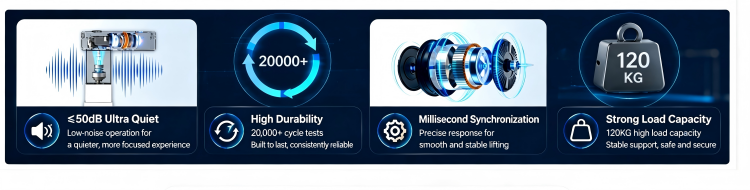
4.2Ultra-Smooth & Low Noise: High-precision lead screws and guide rails reduce operating vibrations to quiet levels (as low as ≤50dB).
4.3Millisecond Synchronized Control: Multi-motor systems ensure synchronized column movement to keep the desktop perfectly level.
4.4Long-Term Durability: Verified through tens of thousands of high-frequency fatigue tests (e.g., over 20,000 cycles under a 120 kg load) for multi-year reliability.
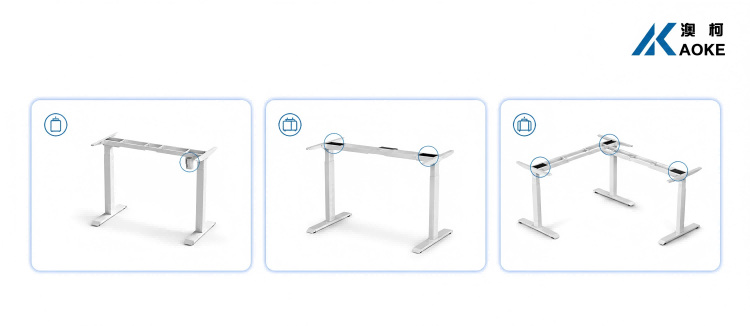
4.5Flexible Modular Design: Accommodates 2-stage or 3-stage columns as well as single- or multi-user layouts across office, home, gaming, education, and medical spaces.
5. Applications: From Office Spaces to Diverse Environments
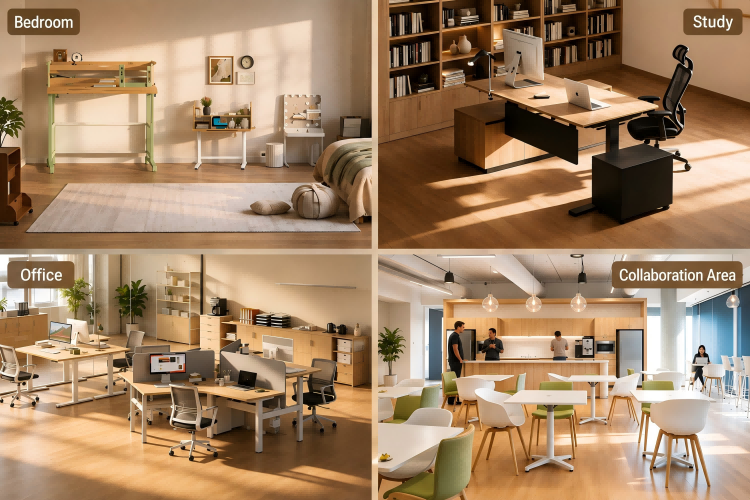
In industrial automation, linear motion technology handles equipment positioning, material handling, and automated production; in robotics, it enables fast, accurate straight-line movement; in medical devices, it delivers smooth and reliable motion control.
In ergonomic furniture, linear motion technology seamlessly pairs with human-centric design:
Office Spaces: Supports sit-stand alternating work habits.
Home Offices: Adapts flexibly to individual user height preferences.
Gaming Setups: Provides ergonomic height adjustments to ensure long-term comfort.
Educational Settings: Accommodates users of various ages and heights.
Conference Spaces: Facilitates effortless height adjustments between work modes.
Custom Applications: Tailors height and structural configurations to specialized project needs.
Standing desks are not the endpoint of linear motion technology—they represent its practical integration into everyday living spaces.
6. AOKE: From "Motors" to Complete Linear Motion Systems
As a leading domestic enterprise in linear drive systems, AOKE focuses on system synergy across power, structure, control, and reliability.
AOKE continuously deepens its expertise in linear motion technology, boasting an in-house technology R&D ratio exceeding 90%. We continuously develop and refine drive systems, lifting columns, control units, and complete desk frame structures.
During product development, we evaluate not only lifting speed and maximum load, but also long-term operating reliability. For example, in dual-motor fatigue testing, endurance is validated under:
High load conditions
38 mm/s operating speed
Over 20,000+ continuous cycles
Such testing is not meant to chase a single parameter, but to verify the deep synergy between drive systems, mechanical structures, and control algorithms through extensive repetitive motion.
Motion Partner Rise Together
When pressing the adjustment button, all that is visible is the desktop moving from one height to another. Behind this simple action, an entire integrated linear motion system works in unison: motors provide the power source, transmission systems convert the energy, lifting columns execute linear movement, electronic control systems ensure precise synchronization, and desk frame structures support the entire motion process.
So when choosing a standing desk, instead of merely asking:
"What motor does it use?"
It is worth exploring further:
"What kind of linear motion system powers it?"
Frequently Asked Questions (FAQ)
Q1: What does linear motion technology mean?
Linear motion technology is the mechanical and electrical engineering integration that converts rotational motion from a motor into linear reciprocating movement. In electric standing desks, it serves as the core power engine determining smooth operation, precise positioning, high load capacity, and long-term durability.
Q2: How should one evaluate and select an excellent linear drive solution?
Focus on full-load performance rather than empty-load parameters.
Align choice with specific requirements for motors, column stroke, and equipment load capacity.
For multi-motor systems, focus on synchronization and adjustment capabilities during column movement.
For B2B, engineering projects, and OEM/ODM clients, consider whether products can be customized according to brand requirements.
Q3: How should I choose between single-motor, dual-motor, or multi-motor standing desks?
There is no absolute answer:
Single-motor systems suit lightweight setups with limited load capacity requirements.
Dual-motor and multi-motor systems excel with larger desktops, heavier loads, and frequent high-intensity usage. Selections should combine desktop dimensions, load targets, adjustment ranges, and overall product positioning.
Q4: Do AOKE linear motion products come with a warranty?
Effective January 1, 2026, AOKE provides a lifetime warranty on the main lifting column structure (including motors) for qualifying linear motion products. Electronic control systems and other components are covered under their corresponding warranty policies.
Q5: Can AOKE provide OEM/ODM linear motion solutions?
Yes. AOKE provides one-stop modular customization for desk frames and linear drive modules tailored to client needs:
Desktop dimensions
Load capacity requirements
Adjustment height range
Structural configurations
Functional requirements
Application scenarios
Looking for the Right Linear Motion Solution?
AOKE | Dedicated to linear motion technology — making every adjustment smooth, precise, and reliable.
🌐 www.aokemotion.com
📨 hwsm@aokefurniture.com
Compare Products 0
No products for comparison
-